Precision agriculture is no longer a thing of the future but an everyday tool on many farms. Within soil preparation, one of its most interesting advances is Dynamic Scan variable-depth technology, which measures soil hardness in real time and adapts the pass metre by metre. The result is twofold: you decompact exactly where it is needed and save energy where it is not. This article explains what Dynamic Scan is, how it works and why it can change the way you subsoil.
The problem with working at a fixed depth
Compaction is never uniform within a field. It changes with texture, with wheel tracks, with headlands and with the history of machinery passes. Traditional tillage, however, applies the same depth across the whole field. That almost always means two things: working too deep in the areas that do not need it —wasting fuel and time— and sometimes falling short right where compaction is worst. Adjusting depth by eye, from the cab, is practically impossible.
What Dynamic Scan is
Dynamic Scan is a variable-depth system that turns subsoiling into an intelligent operation. Instead of working at a constant depth, the system continuously measures the resistance the soil offers and adjusts the pass accordingly, concentrating the effort where there really is a compacted layer. This way the implement responds to what it finds along each stretch of the field rather than applying a single recipe to the whole plot. You can learn about the technology in detail on the Dynamic Scan page. This removes much of the guesswork involved in deciding depth from the cab without knowing what really lies beneath the wheels.
Variable depth and real-time hardness maps
The key to this technology is that it turns soil information into a concrete action on the go. As the equipment advances, it reads the hardness of the ground and builds a picture of where compaction lies. That reading serves two purposes:
- Acting in real time: working depth adapts on the move to the resistance measured at each point.
- Documenting the field: hardness data helps you understand the state of the soil and plan future operations better.
Instead of treating the whole field alike, the farmer works with judgement, backed by objective data from the ground itself.
Benefits: saving and soil care
Matching depth to real compaction brings very tangible benefits to the farm.
- Fuel saving: no over-working in areas that do not need it, which cuts consumption and costs.
- Greater efficiency: effort is concentrated where it really counts, improving the result of the pass.
- Soil care: unnecessary tillage is avoided and the structure is respected where the profile is healthy.
- Better planning: knowing the state of the soil helps decide when and where to act in the future.
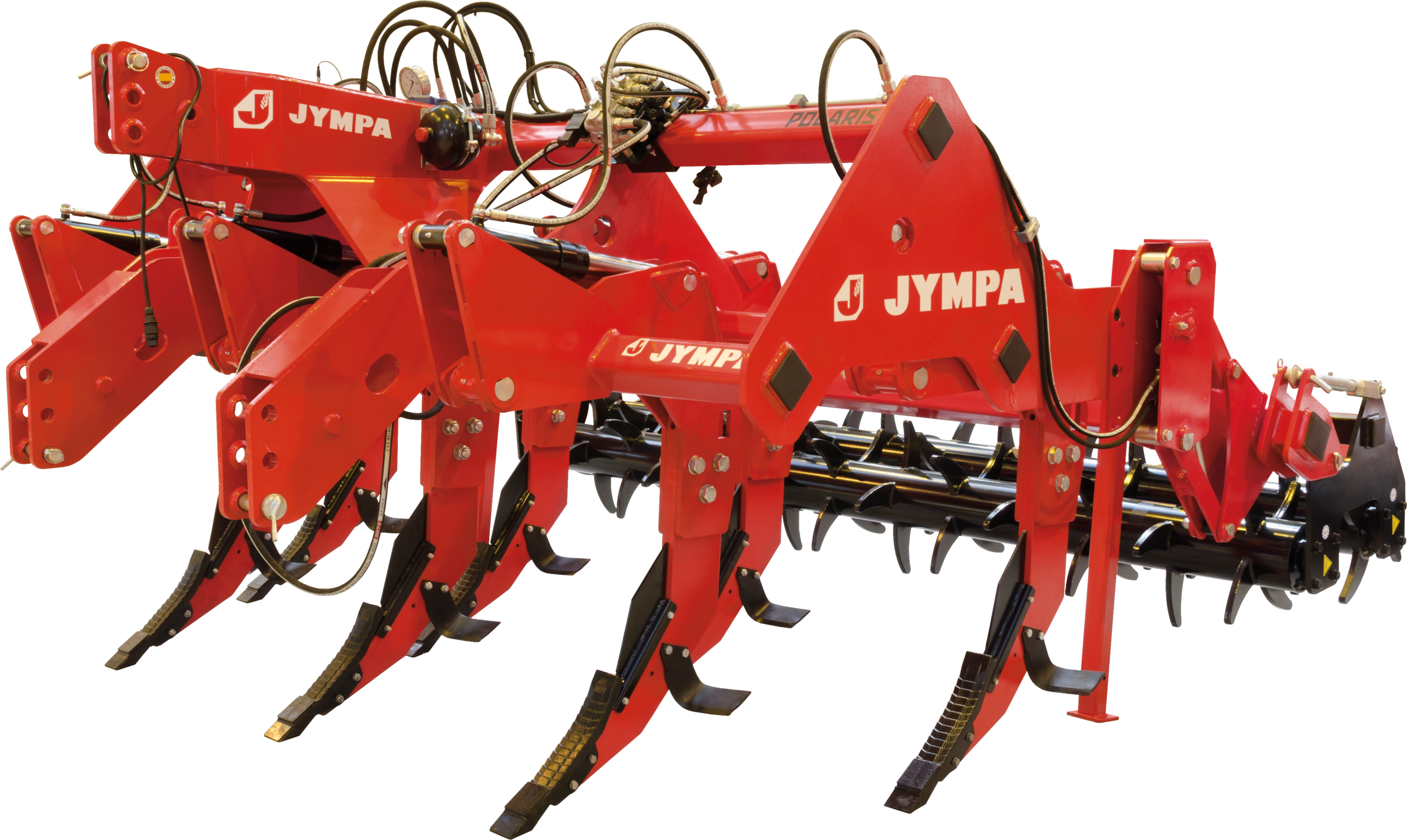
This technology fits into deep-decompaction work, so it complements the JYMPA subsoilers range naturally to get the most out of every pass.
Where it adds the most value
Variable depth shines above all when fields are heterogeneous: soils with changes in texture, large fields with very different zones, or ground with an uneven traffic history. In those cases the difference between treating everything the same and adapting to the real terrain is clearer, both in fuel saving and in work quality. It is also very useful when you want to justify and document operations, something increasingly valued in modern agronomic management. On small, very uniform fields the benefit is smaller, but even there it avoids the excessive tillage that compacts and wastes.
Conclusion
Precision agriculture is not about making work more complicated but about doing it more intelligently. With Dynamic Scan, subsoiling stops being a uniform operation and adapts to the real soil of each field, saving energy and caring for the profile. If you want to discover how to apply variable depth on your farm, visit JYMPA’s Dynamic Scan page or talk to the technical team. Your soil and your fuel tank will both thank you for it.